 Singing Coach AI
Geoff Tate’s vocal range: F#1–G#5 (baritone)
Queensrÿche’s operatic voice of 1980s progressive metal. Geoff Tate’s range is commonly cited as roughly F#1 to G#5, just over 4 octaves. Estimates are compiled from studio recordings and live performances, so treat the exact edges as approximate.
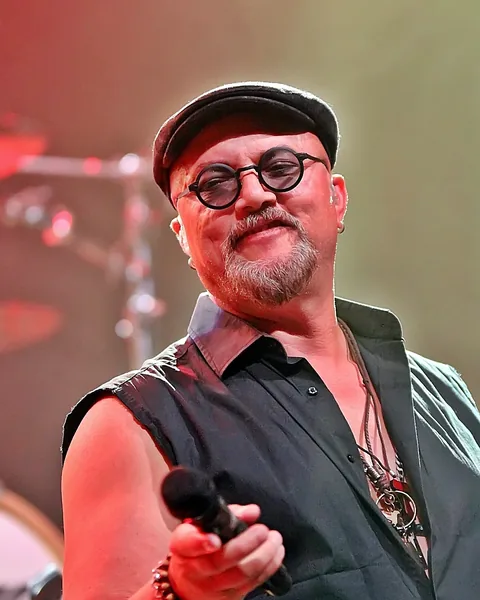
Geoff Tate’s commonly cited range on the keyboard
Wondering how your voice compares? Take the free vocal range test. It takes about a minute, right in your browser.
The voice
Geoff Tate’s voice defined Queensrÿche’s 1980s progressive metal: operatic and rich in vibrato, with high notes that soared over the band on Operation: Mindcrime (1988). Range databases and Wikipedia’s list of non-classical baritones class him as a baritone with an exceptional upper extension, and his commonly cited range is roughly F#1 to G#5, just over four octaves; interviews have long credited him with four. The bottom of that span comes from recent live shows, the top from his 1980s recordings.
Many listeners call Tate a tenor because his classic high notes sit in tenor territory and above, sung in a bright, ringing head voice. His speaking timbre and natural low end are baritone, though, and his recent singing focuses more on the middle range. To approach his songs, build the high notes in a light mix first, keep the throat open and the vowels tall, and let vibrato come from relaxed support rather than pushing. The 1990 ballad Silent Lucidity shows his control at gentle volume.
The 1980s wails are specialist singing, and Tate himself has said he can no longer hit those high notes the way he once did, so he performs the classics in lower keys. Follow his lead: warm up for at least ten minutes, sing high passages lighter than the record, lower the key when you need to, and stop at once if you feel scratching or soreness. Hoarseness that lasts more than two weeks is a reason to see a doctor.
Range moments worth studying
Queen of the Reich
From the band’s 1983 debut EP: a piercing opening and verses pushed high into the fifth octave, one of metal’s classic high-note tests.
Take Hold of the Flame
Soaring choruses high in his voice with heavy vibrato; stamina matters as much as the top notes.
Eyes of a Stranger
The closing track of Operation: Mindcrime sustains a dramatic upper-middle range through long phrases.
Silent Lucidity
A soft, orchestral ballad sung mostly in a calm middle voice, and the friendliest entry point to his catalogue.
Can you sing it?
High baritones and tenors with a strong head voice can try his songs, and most singers will want to lower the 1980s material. Start with Silent Lucidity, which stays in a calm middle range. New to voice types? Read what it means to be a baritone, or take the free voice type test to see where you fit. A range label only tells you the edges. Whether a song feels good depends on where its melody sits. The Singing Coach AI app listens to you sing real songs, maps your range and tessitura, and tells you which keys and songs actually fit your voice, including whether Geoff Tate’s catalogue is in reach today.
FAQ
What is Geoff Tate’s voice type?
How many octaves can Geoff Tate sing?
Why does Geoff Tate sing Queensrÿche songs in a lower key now?
Voices in the same neighbourhood
Singers whose cited range and voice type sit closest to Geoff Tate’s. If one of them suits you, the other probably will too.
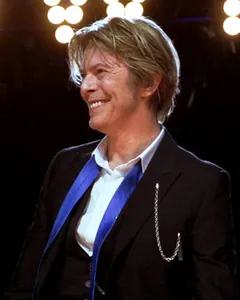 David BowieG#1–G5 · baritone
 Barry WhiteF#1–E5 · bass-baritone
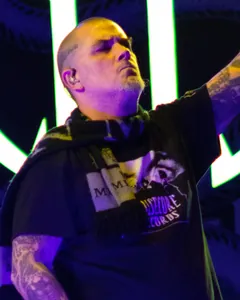 Phil AnselmoE1–A#5 · baritone
Anthony KiedisG1–C#6 · baritone
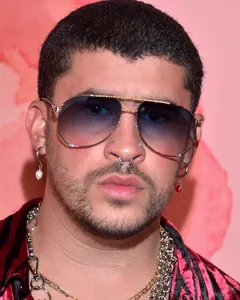 Bad BunnyC#2–F5 · baritone
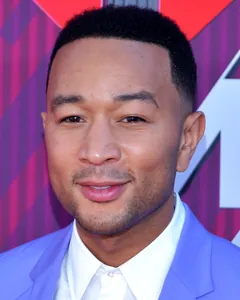 John LegendE2–G5 · baritone
Photo: Klaus Hellmerich, CC BY-SA 4.0, via Wikimedia Commons. Range figures are estimates compiled from recordings and are not endorsed by the artist.