 Singing Coach AI
Linda Ronstadt’s vocal range: C#3–D#6 (soprano)
The genre-hopping voice of 1970s California rock. Linda Ronstadt’s range is commonly cited as roughly C#3 to D#6, just over 3 octaves. Estimates are compiled from studio recordings and live performances, so treat the exact edges as approximate.
Linda Ronstadt’s commonly cited range on the keyboard
Wondering how your voice compares? Take the free vocal range test. It takes about a minute, right in your browser.
The voice
Linda Ronstadt is usually classed as a soprano, though her range was famously wide: commonly cited at roughly C#3 to D#6, and described on Wikipedia as running from contralto to soprano. Her 1970s rock hits used the lower, chest-heavy part of that range, a big, clear belt around the octave above middle C. Then she sang Mabel in The Pirates of Penzance on Broadway, trills and all, played Mimi in Puccini's La Bohème at the Public Theater, made standards albums with Nelson Riddle and recorded Mexican songs on Canciones de Mi Padre. Few singers have changed genres so completely and sounded at home in each.
Her rock songs sit mostly between F#3 and C#5, comfortable for mezzos and many sopranos, but they demand a full, open chest belt with no strain at the top. You're No Good and When Will I Be Loved are built on that sound. The trap is shouting: Ronstadt's belt was loud but round, with an open throat and steady breath underneath. Practice the chorus on an open 'ah' at medium volume and let the voice ring rather than push. Lighter sopranos can take her songs up a step and use more mix.
Ronstadt announced her retirement in 2011 and later revealed that she could no longer sing, because of a degenerative condition first diagnosed as Parkinson's disease and later identified as progressive supranuclear palsy. Her recordings remain the best teachers: the Trio albums with Dolly Parton and Emmylou Harris are a lesson in blend, and What's New shows how to carry slow standards on the breath.
Range moments worth studying
You're No Good
Listed at F3 to C#5. A slow-burning verse in the low-middle voice that erupts into a full chest belt in the chorus.
Blue Bayou
Listed at F#3 to C#5. A gentle, country-tinged ballad that climbs to a long, ringing high note near the end; the test is sustaining it without pushing.
When Will I Be Loved
Listed at B3 to C#5, a narrow range sung with a bright, punchy belt and the easiest of her hits to learn.
Poor Wand'ring One
Mabel's coloratura waltz from The Pirates of Penzance, full of trills and high runs that reveal the classical soprano under the rock voice.
Sing Linda Ronstadt’s songs with feedback
Every song below has a full guide on this site: the range, the key, where the hard notes are, and how to practise them. Open one, then record it in the app to hear how close you are.
Can you sing it?
Mezzos and sopranos with a solid belt can start with When Will I Be Loved (B3 to C#5); Blue Bayou is the next step once you can sustain its final high note. New to voice types? Read what it means to be a soprano, or take the free voice type test to see where you fit. A range label only tells you the edges. Whether a song feels good depends on where its melody sits. The Singing Coach AI app listens to you sing real songs, maps your range and tessitura, and tells you which keys and songs actually fit your voice, including whether Linda Ronstadt’s catalogue is in reach today.
FAQ
What is Linda Ronstadt's voice type?
How many octaves could Linda Ronstadt sing?
Was Linda Ronstadt a soprano or a mezzo-soprano?
Voices in the same neighbourhood
Singers whose cited range and voice type sit closest to Linda Ronstadt’s. If one of them suits you, the other probably will too.
 Hayley WilliamsE3–C6 · soprano
 Julie AndrewsF3–F6 · soprano
 Sabrina CarpenterE3–C6 · light lyric soprano
 Zara LarssonF#3–E6 · soprano
Emmy RossumG3–E6 · lyric soprano
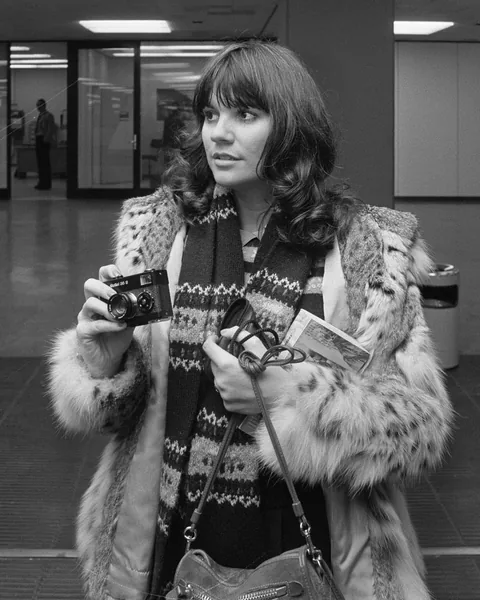
Photo: Rob Bogaerts for Anefo, CC0, via Wikimedia Commons. Range figures are estimates compiled from recordings and are not endorsed by the artist.