 Singing Coach AI
Phillipa Soo’s vocal range: F3–F#5 (soprano)
Hamilton's original Eliza, with a pure, clear soprano. Phillipa Soo’s range is commonly cited as roughly F3 to F#5, just over 2 octaves. Estimates are compiled from studio recordings and live performances, so treat the exact edges as approximate.
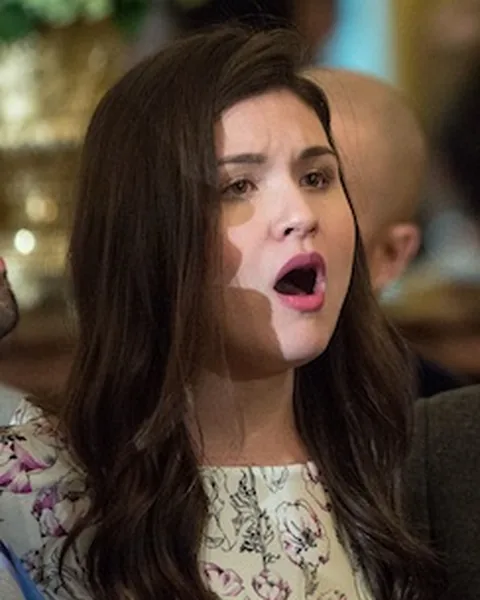
Phillipa Soo’s commonly cited range on the keyboard
Wondering how your voice compares? Take the free vocal range test. It takes about a minute, right in your browser.
The voice
Phillipa Soo is a soprano best known as the original Eliza in Hamilton, and the roles she created run roughly F3 to F#5, from the low end of Helpless to the top of Natasha in Natasha, Pierre & The Great Comet of 1812. She trained as an actor at Juilliard rather than as a classical singer, and it shows in the best way: her voice is clear and unforced, she often sings quiet lines with a simple, straight tone, and every word lands. She belts when the story needs it, but her signature is a pure contemporary mix.
Eliza's songs look easy on paper and are hard in performance. Helpless is a light, bouncy mix, but Burn asks for a controlled belt up to E5 while the emotion pushes you to oversing. The common mistake is letting anger tighten the throat in Burn; Soo keeps the tone clean and lets the lyric carry the fury. Practice the high phrases on an 'ah' at moderate volume, then add the words, and keep the verses close to speech.
Since Hamilton she has taken on very different soprano roles: the title role in Amélie, Cinderella in the 2022 Broadway revival of Into the Woods, which won her a second Grammy, and Guenevere in the 2023 revival of Camelot, a legit soprano part with a more classical line. Comparing her Eliza with her Cinderella is a useful lesson in how one voice adapts to a contemporary score and to Sondheim.
Range moments worth studying
Helpless
Listed at F3 to F5. A bouncy, R&B-flavored love song; the challenge is keeping the mix light and the rhythm crisp.
Burn
Listed at A3 to E5. A slow, angry ballad sung alone on stage, with belted lines up near E5 that have to stay controlled.
No One Else
Natasha's solo from The Great Comet, roughly A3 to F5: a dreamy, floating soprano solo that needs a soft, steady line.
On the Steps of the Palace
Cinderella's quick, wordy solo from Into the Woods, which she sang in the 2022 revival; agility and diction over volume.
Sing Phillipa Soo’s songs with feedback
Every song below has a full guide on this site: the range, the key, where the hard notes are, and how to practise them. Open one, then record it in the app to hear how close you are.
Can you sing it?
Sopranos and higher mezzos can start with Helpless (F3 to F5); Burn (A3 to E5) has a narrower range but is emotionally harder to keep controlled. New to voice types? Read what it means to be a soprano, or take the free voice type test to see where you fit. A range label only tells you the edges. Whether a song feels good depends on where its melody sits. The Singing Coach AI app listens to you sing real songs, maps your range and tessitura, and tells you which keys and songs actually fit your voice, including whether Phillipa Soo’s catalogue is in reach today.
FAQ
What is Phillipa Soo's voice type?
How many octaves can Phillipa Soo sing?
Is Eliza in Hamilton a soprano role?
Voices in the same neighbourhood
Singers whose cited range and voice type sit closest to Phillipa Soo’s. If one of them suits you, the other probably will too.
 Tate McRaeE3–F5 · soprano
 Dolly PartonF3–B5 · light lyric soprano
 Hayley WilliamsE3–C6 · soprano
 Sabrina CarpenterE3–C6 · light lyric soprano
 Julie AndrewsF3–F6 · soprano
 Zara LarssonF#3–E6 · soprano
Photo: Amanda Lucidon, Public domain, via Wikimedia Commons. Range figures are estimates compiled from recordings and are not endorsed by the artist.