 Singing Coach AI
Benson Boone’s vocal range: G#2–A5 (tenor)
Backflipping pop belter with a big head voice. Benson Boone’s range is commonly cited as roughly G#2 to A5, about about 3 octaves. Estimates are compiled from studio recordings and live performances, so treat the exact edges as approximate.
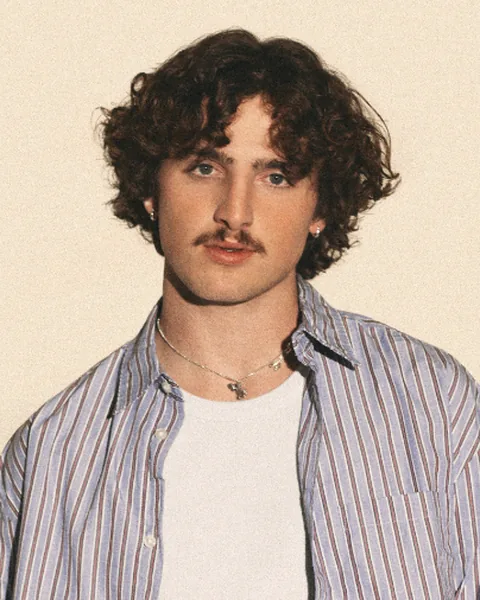
Benson Boone’s commonly cited range on the keyboard
Wondering how your voice compares? Take the free vocal range test. It takes about a minute, right in your browser.
The voice
Benson Boone is a tenor with a commonly cited range of roughly G#2–A5. The voice is warm and slightly husky low down, then opens into a huge, ringing belt around B4–C#5 and a bright, easy head voice above that. It is built for drama: he tends to start a song quietly, almost speaking, and then let it explode, which is why Beautiful Things became a global hit. The stage backflips get the headlines, but the mix that lets him land C#5 night after night is the real trick.
His songs are about the build. The verses sit low and intimate, often around G#2–D4, and then the chorus jumps more than an octave into full voice. The common mistake is arriving at the chorus with nothing left because the verse was sung too heavily. He keeps the low section light and speech-like so the belt has somewhere to go. Practical tip: practise the chorus of Beautiful Things on a sustained “yeah” at a moderate volume before adding the words, and lower the key by a step or two until the C#5 feels lifted rather than heaved.
Range moments worth studying
Beautiful Things
Listed at G#2 to C#5: a whispered, low verse near G#2 that detonates into a chorus belted on C#5, a two-octave jump in a single song.
In the Stars
A ballad that climbs from a tender mid-range verse into a sustained head-voice climax near the top of his range.
Slow It Down
Built on a light, airy falsetto in the hook, showing the softer side of the voice.
Ghost Town
His breakthrough single: mostly in the middle of the voice, with a chorus that opens up but never reaches the extremes of Beautiful Things.
Sing Benson Boone’s songs with feedback
Every song below has a full guide on this site: the range, the key, where the hard notes are, and how to practise them. Open one, then record it in the app to hear how close you are.
Can you sing it?
Tenors and high baritones with a working belt can attempt his songs; Beautiful Things (G#2–C#5) is the library entry point and works well transposed down at first, with Ghost Town as a gentler alternative. A range label only tells you the edges. Whether a song feels good depends on where its melody sits. The Singing Coach AI app listens to you sing real songs, maps your range and tessitura, and tells you which keys and songs actually fit your voice, including whether Benson Boone’s catalogue is in reach today.
FAQ
What is Benson Boone’s voice type?
How many octaves can Benson Boone sing?
Can a beginner sing Benson Boone’s songs?
Voices in the same neighbourhood
Singers whose cited range and voice type sit closest to Benson Boone’s. If one of them suits you, the other probably will too.
 Chester BenningtonG#2–A5 · tenor
 Ed SheeranG2–A5 · tenor
 Conan GrayF#2–A5 · tenor
 Steve PerryF#2–A5 · tenor
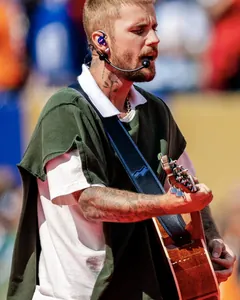 Justin BieberA2–G5 · tenor
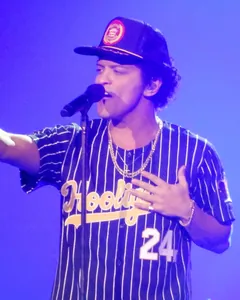 Bruno MarsG#2–E5 · tenor
Photo: Warner Records, CC BY-SA 4.0, via Wikimedia Commons. Range figures are estimates compiled from recordings and are not endorsed by the artist.