 Singing Coach AI
Chino Moreno’s vocal range: D2–G5 (tenor)
Deftones’ dreamy croon-to-scream alternative metal voice. Chino Moreno’s range is commonly cited as roughly D2 to G5, about 3.5 octaves. Estimates are compiled from studio recordings and live performances, so treat the exact edges as approximate.
Chino Moreno’s commonly cited range on the keyboard
Wondering how your voice compares? Take the free vocal range test. It takes about a minute, right in your browser.
The voice
Chino Moreno, the singer of Deftones, moves between a breathy, dreamlike croon and raw, howled screams, often within a single song. Wikipedia describes him as a dramatic tenor, and his vocal influences include Morrissey, Mike Patton and Prince. A detailed range database puts his range at roughly D2 to G5, about three and a half octaves; claims of four octaves or more usually count inhaled screams and other effects rather than sung notes. His melodies themselves sit mostly in the upper third and fourth octaves.
The croon is harder than it sounds. Copying his airy tone with too much breath makes the pitch sag and the voice tire quickly, so start with a clear, quiet tone and add air gradually while the pitch holds. His soft head-voice passages, as in Digital Bath, need a relaxed throat and steady support at low volume. Then work on dynamics: the leap from a whispered verse to a full chorus in Change (In the House of Flies) is the essence of his style.
His screams are a specialist technique, and a detailed range database notes that some of his highest sounds are inhaled effects. Do not try to copy them by shouting. If you want to learn distortion, find a qualified teacher, warm up first, keep screamed passages short, and stop immediately if anything hurts or your voice turns hoarse. Hoarseness lasting more than two weeks is a reason to see a doctor or speech-language pathologist.
Range moments worth studying
Change (In the House of Flies)
Hushed, breathy verses in the middle of his voice build to a howled chorus, a study in dynamics more than range.
Be Quiet and Drive (Far Away)
A wistful, sustained melody floating in his upper-middle register over walls of guitar; the most singable of the Deftones classics.
My Own Summer (Shove It)
Whispered verses explode into screamed choruses, and the screams are where to take care.
Digital Bath
Soft, airy head voice drifting above the band in the verses before a fuller chorus.
Can you sing it?
Tenors and high baritones fit his melodies. Start with Be Quiet and Drive (Far Away) or Change (In the House of Flies), and leave the screamed sections alone until you have proper guidance. New to voice types? Read what it means to be a tenor, or take the free voice type test to see where you fit. A range label only tells you the edges. Whether a song feels good depends on where its melody sits. The Singing Coach AI app listens to you sing real songs, maps your range and tessitura, and tells you which keys and songs actually fit your voice, including whether Chino Moreno’s catalogue is in reach today.
FAQ
What is Chino Moreno’s voice type?
How many octaves can Chino Moreno sing?
Is it safe to copy Chino Moreno’s screams?
Voices in the same neighbourhood
Singers whose cited range and voice type sit closest to Chino Moreno’s. If one of them suits you, the other probably will too.
 Robert PlantD2–A5 · tenor
 Patrick StumpC#2–A5 · tenor
 Adam LambertD2–B5 · tenor
 Billy JoelF2–F#5 · tenor
 George MichaelD2–B5 · tenor
 Morten HarketC2–A5 · tenor
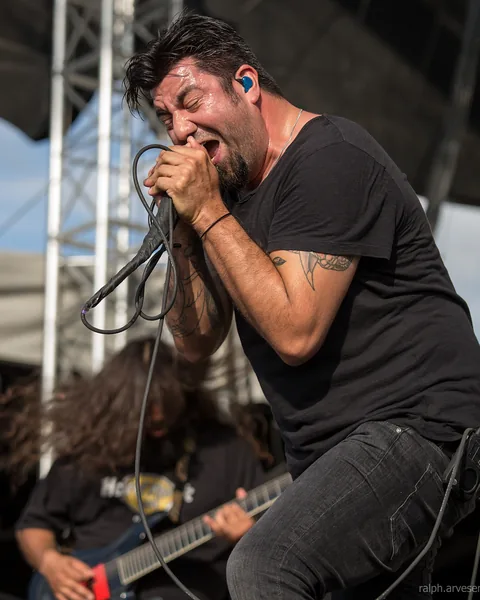
Photo: Ralph Arvesen, CC BY 2.0, via Wikimedia Commons. Range figures are estimates compiled from recordings and are not endorsed by the artist.