 Singing Coach AI
Ella Fitzgerald’s vocal range: D3–C6 (mezzo-soprano)
The First Lady of Song and jazz’s scat master. Ella Fitzgerald’s range is commonly cited as roughly D3 to C6, just under 3 octaves. Estimates are compiled from studio recordings and live performances, so treat the exact edges as approximate.
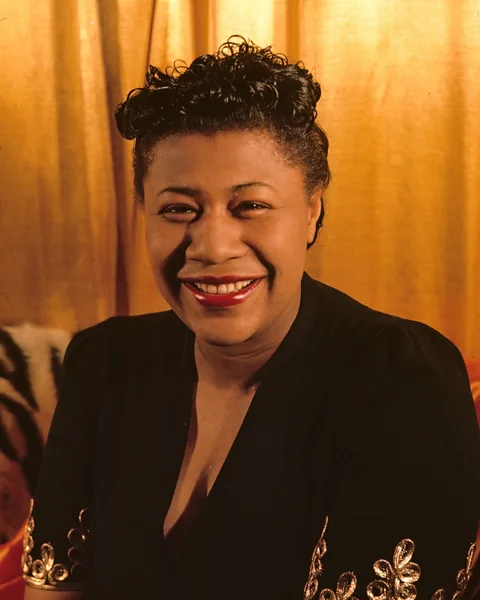
Ella Fitzgerald’s commonly cited range on the keyboard
Wondering how your voice compares? Take the free vocal range test. It takes about a minute, right in your browser.
The voice
Ella Fitzgerald, the First Lady of Song, had a light, pure voice and some of the most accurate intonation ever recorded. Most references list her as a mezzo-soprano, though some call her a contralto, and her commonly cited range is roughly D3 to C6, close to three octaves; a database of her live recordings stretches it slightly, from G#2 to C#6. Her diction, swing and horn-like scat improvisation made her the model for generations of jazz singers.
Her comfortable center sat around the octave above middle C, and she rarely forced anything: high notes were placed lightly and low notes almost spoken. To sing her standards, put rhythm and words first. Speak the lyric in swing rhythm, then sing it with the same crisp consonants, and keep the tone forward and unpressured. For scat, copy a short trumpet or saxophone solo on simple syllables such as “doo,” “ba” and “dat,” slowly at first, and aim for the shape of the line before the speed.
Range moments worth studying
Summertime
Her lines in the duet with Louis Armstrong stay mostly between A3 and C5, with improvised runs up to about D5.
Dream a Little Dream of Me
Sung in a relaxed, speech-like range, roughly G3 to A#4, with a light touch up to C5.
Mack the Knife
Her Grammy-winning live performance in Berlin (1960), where she forgot the lyrics and improvised new ones as the arrangement kept stepping up in key.
A-Tisket, A-Tasket
Her 1938 breakthrough hit with Chick Webb’s orchestra: bright, light and mostly in the middle of her voice.
Can you sing it?
Altos, mezzos and sopranos can sing her standards in the original keys, and baritones and tenors can take them an octave down. Start with Dream a Little Dream of Me or Cheek to Cheek, which stay between G3 and C5. New to voice types? Read what it means to be a mezzo-soprano, or take the free voice type test to see where you fit. A range label only tells you the edges. Whether a song feels good depends on where its melody sits. The Singing Coach AI app listens to you sing real songs, maps your range and tessitura, and tells you which keys and songs actually fit your voice, including whether Ella Fitzgerald’s catalogue is in reach today.
FAQ
What was Ella Fitzgerald’s voice type?
How many octaves could Ella Fitzgerald sing?
How did Ella Fitzgerald learn to scat?
Voices in the same neighbourhood
Singers whose cited range and voice type sit closest to Ella Fitzgerald’s. If one of them suits you, the other probably will too.
 Billie EilishD3–B5 · mezzo-soprano
Jennifer HudsonD#3–C6 · mezzo-soprano
 Lana Del ReyD3–B5 · mezzo-soprano
 MadonnaD3–B5 · mezzo-soprano
 AdeleC3–C6 · mezzo-soprano
AdoD3–D6 · mezzo-soprano
Photo: Carl Van Vechten, Public domain, via Wikimedia Commons. Range figures are estimates compiled from recordings and are not endorsed by the artist.