 Singing Coach AI
Layne Staley’s vocal range: E2–E5 (baritone)
Grunge’s haunted harmonies and ragged power. Layne Staley’s range is commonly cited as roughly E2 to E5, about 3 octaves. Estimates are compiled from studio recordings and live performances, so treat the exact edges as approximate.
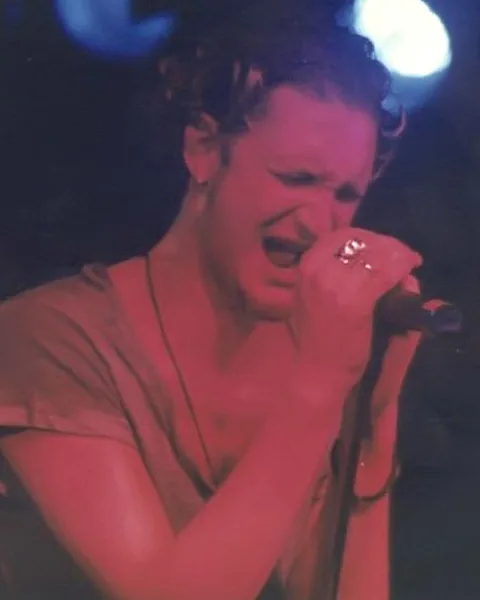
Layne Staley’s commonly cited range on the keyboard
Wondering how your voice compares? Take the free vocal range test. It takes about a minute, right in your browser.
The voice
Layne Staley of Alice in Chains was a dark, powerful baritone whose recorded range is commonly cited at roughly E2–E5. The instrument had a heavy, resonant core and a distinctive nasal snarl that could turn into a controlled rasp at full volume. What made the sound unique was the harmony writing with Jerry Cantrell: Staley often sang the higher part in close intervals, producing the eerie, droning blend of Rooster and Nutshell. Even at his most aggressive there was a mournful, almost liturgical quality to his phrasing.
Singing Staley well means resisting the urge to shout. His verses sit low and conversational, often around the bottom of the staff, and the power comes from resonance and vowel shaping rather than volume. The choruses of Man in the Box and Would? climb toward the top of a baritone’s comfortable range and use a gritty edge that is easy to imitate badly. Aim for a full, forward tone first; add rasp only if it comes without strain. Practise the harmony lines against a recording, since the intervals are unusual and easy to drift from.
The distorted, growled passages on Dirt and the unplugged fragility of the later recordings are two very different kinds of vocal work. Warm up thoroughly before attempting any gritty singing, keep sessions short, and stop immediately if your throat feels sore or scratchy. A clean, well-supported tone is the foundation and the grit is decoration, so build the clean version of every song before you add any edge to it.
Range moments worth studying
Man in the Box
The chorus is a long, wailing sustain that sits high in the baritone range, around D4–E4, with a raspy edge on the held notes.
Would?
A low, brooding verse near the bottom of the staff opens into a chorus that leaps upward and lands its climactic ‘if I would, could you’ around the top of the staff.
Rooster
Slow-building, with verses in the lower-middle of the voice and a chorus that rises in close harmony to around D4–E4.
Nutshell
An intimate acoustic ballad that stays mostly within an octave in the lower-middle voice, all about tone and honesty.
Can you sing it?
Baritones and low tenors with a rich chest voice are the natural fit. Start with Nutshell or Down in a Hole, which stay low and clean, before attempting the sustained chorus of Man in the Box. A range label only tells you the edges. Whether a song feels good depends on where its melody sits. The Singing Coach AI app listens to you sing real songs, maps your range and tessitura, and tells you which keys and songs actually fit your voice, including whether Layne Staley’s catalogue is in reach today.
FAQ
What was Layne Staley’s voice type?
How many octaves could Layne Staley sing?
Did Layne Staley use rasp or screaming?
Voices in the same neighbourhood
Singers whose cited range and voice type sit closest to Layne Staley’s. If one of them suits you, the other probably will too.
 Chris MartinF#2–E5 · baritone
 James HetfieldD2–E5 · baritone
 John LegendE2–G5 · baritone
 Julian CasablancasE2–C#5 · baritone
 Corey TaylorF#2–F#5 · baritone
 Alex TurnerE2–B4 · baritone
Photo: Rex Aran Emrick, CC BY-SA 3.0, via Wikimedia Commons. Range figures are estimates compiled from recordings and are not endorsed by the artist.