 Singing Coach AI
Luther Vandross’ vocal range: F2–A5 (tenor)
The Velvet Voice of 1980s and ’90s R&B. Luther Vandross’ range is commonly cited as roughly F2 to A5, just over 3 octaves. Estimates are compiled from studio recordings and live performances, so treat the exact edges as approximate.
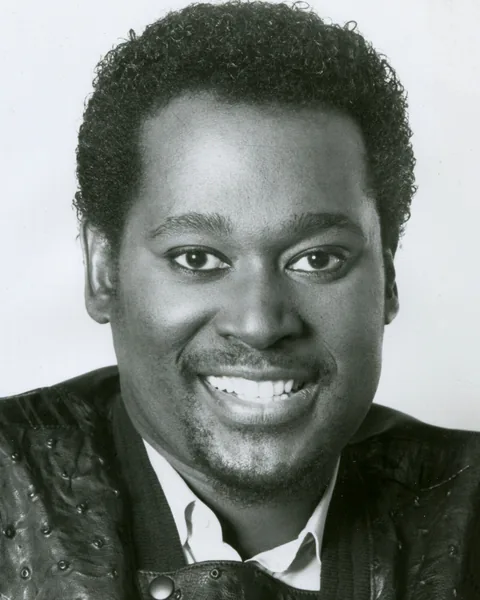
Luther Vandross’ commonly cited range on the keyboard
Wondering how your voice compares? Take the free vocal range test. It takes about a minute, right in your browser.
The voice
Luther Vandross was a tenor whose nickname, The Velvet Voice, describes the sound exactly: a warm, rounded tone that stayed smooth from the bottom of his range to the top. His range is generally put at just over three octaves, roughly F2 to A5, with the highest notes in light head-voice ad-libs. Before his solo career he was a busy session and backing singer, including on David Bowie’s Young Americans, and that background shows in his precise pitch and carefully stacked harmonies.
Most of his melodies sit around the tenor passaggio, roughly D4 to G4, and he made that zone sound effortless. To sing him you need a balanced mix that carries chest warmth up to about C5 without shouting, plus runs that land exactly on the beat. The usual mistake is oversinging: adding volume, rasp and extra riffs he never used. Practice his runs slowly on an open vowel, one note at a time, then bring them up to tempo, and keep the overall volume a notch lower than feels natural.
Range moments worth studying
Here and Now
The 1989 wedding favorite, which won him a Grammy, stays mostly in a warm middle register before ad-libs climb to about C5. Keep the ascent smooth rather than pushed.
Power of Love/Love Power
The chorus sits around A#3 to G4 over a brisk groove, with belted ad-libs near C5. A test of rhythmic runs and stamina.
Never Too Much
His 1981 debut single is quick, light and buoyant, sung mostly in a bright upper-middle register. The skill is staying relaxed at speed.
Dance with My Father
The 2003 ballad that won the Grammy for Song of the Year, sung softly and close to the microphone with a gentle lift into the chorus.
Sing Luther Vandross’ songs with feedback
Every song below has a full guide on this site: the range, the key, where the hard notes are, and how to practise them. Open one, then record it in the app to hear how close you are.
Can you sing it?
Tenors and high baritones fit his keys best. Start with Power of Love/Love Power for groove and runs, then Here and Now for ballad control. New to voice types? Read what it means to be a tenor, or take the free voice type test to see where you fit. A range label only tells you the edges. Whether a song feels good depends on where its melody sits. The Singing Coach AI app listens to you sing real songs, maps your range and tessitura, and tells you which keys and songs actually fit your voice, including whether Luther Vandross’ catalogue is in reach today.
FAQ
What was Luther Vandross’s voice type?
How many octaves could Luther Vandross sing?
Was Luther Vandross a tenor or a baritone?
Voices in the same neighbourhood
Singers whose cited range and voice type sit closest to Luther Vandross’. If one of them suits you, the other probably will too.
 Adam LevineF#2–A5 · light lyric tenor
 Conan GrayF#2–A5 · tenor
 Steve PerryF#2–A5 · tenor
 Ed SheeranG2–A5 · tenor
 Sam SmithF2–B5 · tenor
 UsherE2–A#5 · light lyric tenor
Photo: Unknown, Public domain, via Wikimedia Commons. Range figures are estimates compiled from recordings and are not endorsed by the artist.