 Singing Coach AI
Stevie Nicks’ vocal range: D3–E5 (mezzo-soprano)
Rock’s mystic with a husky, unmistakable mezzo. Stevie Nicks’ range is commonly cited as roughly D3 to E5, about about 2 octaves. Estimates are compiled from studio recordings and live performances, so treat the exact edges as approximate.
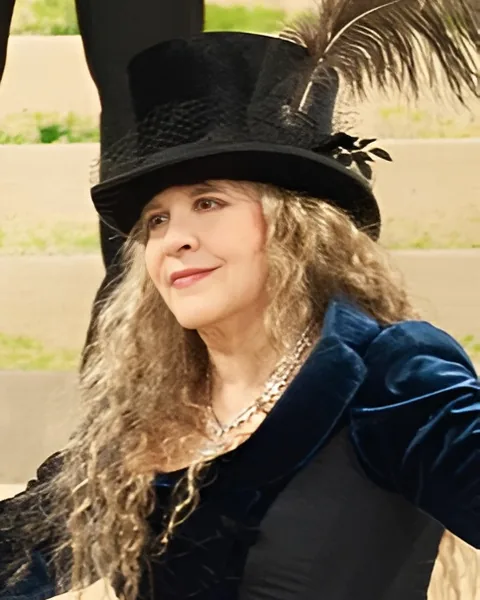
Stevie Nicks’ commonly cited range on the keyboard
Wondering how your voice compares? Take the free vocal range test. It takes about a minute, right in your browser.
The voice
Stevie Nicks is a husky, dark-toned mezzo-soprano, often labelled a contralto, with a commonly cited range of roughly D3–E5. The instrument is instantly recognisable: a warm, slightly raspy middle register, a distinctive fast vibrato that thickens on held notes, and a delivery that is more incantation than technique. Years of touring left the tone rougher and the top lower, but the phrasing and the fluttering shimmer on words like the “white winged dove” of Edge of Seventeen remain hers alone.
Her songs are kind to the voice in terms of range, most sitting between A3 and C5, but they demand character. The melodies are often chanted on a few notes, so the singer has to bring the rhythm and the rasp; a clean, pretty tone sounds wrong. The common mistake is imitating the vibrato by shaking the jaw, which tires the voice. Practical tip: start with Landslide, keep the tone slightly speech-like and let the vibrato happen naturally on longer notes, then bring that same easy delivery to the busier phrasing of Talk To Me.
Range moments worth studying
Talk To Me
The library lists G3 to C5 in C major; a mid-range pop rock melody that pushes to C5 only on the chorus hook.
Edge of Seventeen
Chanted verses on a few repeated notes, then the famous “ooh baby ooh” chorus where the vibrato does the work, all within a modest range.
Landslide
A gentle Fleetwood Mac ballad that stays within roughly an octave and a half and moves stepwise; the ideal entry song.
Dreams
Sits low and cool around the middle of the voice, sung almost conversationally over the groove.
Sing Stevie Nicks’ songs with feedback
Every song below has a full guide on this site: the range, the key, where the hard notes are, and how to practise them. Open one, then record it in the app to hear how close you are.
Can you sing it?
Mezzos, contraltos and male voices singing in the same octave can sing most of her catalogue; Talk To Me (G3–C5) is the library entry point, and Landslide is the gentlest of the Fleetwood Mac songs to start with. A range label only tells you the edges. Whether a song feels good depends on where its melody sits. The Singing Coach AI app listens to you sing real songs, maps your range and tessitura, and tells you which keys and songs actually fit your voice, including whether Stevie Nicks’ catalogue is in reach today.
FAQ
What is Stevie Nicks’s voice type?
How many octaves can Stevie Nicks sing?
Is Stevie Nicks a contralto?
Voices in the same neighbourhood
Singers whose cited range and voice type sit closest to Stevie Nicks’. If one of them suits you, the other probably will too.
 Bonnie TylerD3–E5 · mezzo-soprano
 LaufeyE3–E5 · mezzo-soprano
 Olivia DeanE3–E5 · mezzo-soprano
 Taylor SwiftC3–G5 · mezzo-soprano
 Billie EilishD3–B5 · mezzo-soprano
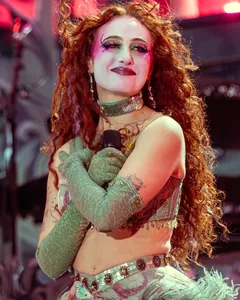 Chappell RoanE3–A5 · mezzo-soprano
Photo: SWinxy, CC BY 4.0, via Wikimedia Commons. Range figures are estimates compiled from recordings and are not endorsed by the artist.