 Singing Coach AI
Cyndi Lauper’s vocal range: C3–A#6 (soprano)
New wave’s four-octave voice with a Queens accent. Cyndi Lauper’s range is commonly cited as roughly C3 to A#6, just under 4 octaves. Estimates are compiled from studio recordings and live performances, so treat the exact edges as approximate.
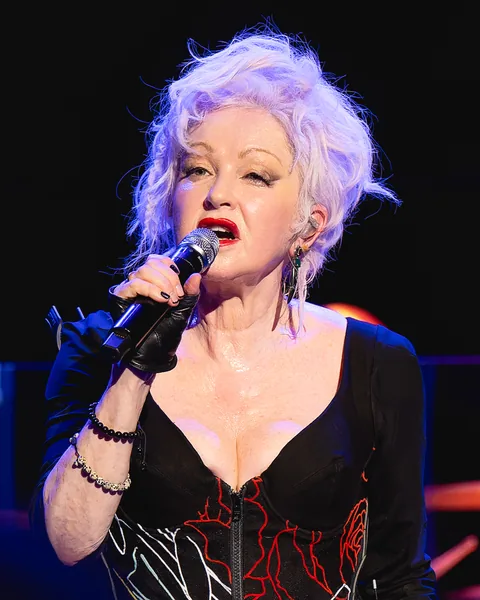
Cyndi Lauper’s commonly cited range on the keyboard
Wondering how your voice compares? Take the free vocal range test. It takes about a minute, right in your browser.
The voice
Cyndi Lauper is a soprano with one of pop’s most individual sounds: a bright, twangy tone colored by her Queens accent and by playful hiccups and cracks. She has been credited with a four-octave range since her days fronting the band Blue Angel, and a detailed range database lists roughly C3 to A#6, just under four octaves, with the very top in whistle register. Her low register is strong for a soprano, and her upper register rings without sounding thin.
Lauper’s hits are more singable than her reputation suggests. Time After Time and True Colors keep their main melodies at or below C5, and the challenge is a soft, steady tone in the low verses. Girls Just Want to Have Fun needs a confident, bright belt around B4 to C#5. Twang is the secret: a narrowed, slightly nasal resonance that makes the voice carry without extra pressure. Practice it on a bratty “nyah” at a comfortable pitch, then keep that brightness as you sing the chorus.
Beyond her own records, Lauper wrote the music and lyrics for the Broadway musical Kinky Boots, which won her the 2013 Tony Award for Best Original Score, the first woman to win that category alone. Her whistle-register squeals are a light effect, not a belt, so never push for them: if a high note only comes out with strain, leave it out and keep the energy in the rhythm.
Range moments worth studying
Girls Just Want to Have Fun
Bouncy verses run between about C#4 and B4; the chorus belt sits around B4 to C#5, with whoops up to E5.
Time After Time
Starts low and conversational around G3, then lifts to C5 on the title line. Gentle dynamics make it a lovely tone exercise.
True Colors
Verses sit low and almost spoken around F#3, the melody rises to about B4, and her ad-libs in the final choruses reach E5.
All Through the Night
A dreamy synth ballad whose main melody stays below C5, with higher ad-libs around D#5 when the vocal returns after the solo.
Sing Cyndi Lauper’s songs with feedback
Every song below has a full guide on this site: the range, the key, where the hard notes are, and how to practise them. Open one, then record it in the app to hear how close you are.
Can you sing it?
Sopranos and mezzos fit her original keys, and altos or tenors can lower them a few semitones. Time After Time and True Colors are the easiest places to start. New to voice types? Read what it means to be a soprano, or take the free voice type test to see where you fit. A range label only tells you the edges. Whether a song feels good depends on where its melody sits. The Singing Coach AI app listens to you sing real songs, maps your range and tessitura, and tells you which keys and songs actually fit your voice, including whether Cyndi Lauper’s catalogue is in reach today.
FAQ
What is Cyndi Lauper’s voice type?
How many octaves can Cyndi Lauper sing?
Can a beginner sing Cyndi Lauper songs?
Voices in the same neighbourhood
Singers whose cited range and voice type sit closest to Cyndi Lauper’s. If one of them suits you, the other probably will too.
 Ariana GrandeD3–E7 · light lyric soprano
 Linda RonstadtC#3–D#6 · soprano
Kristin ChenowethE3–F6 · coloratura soprano
 Julie AndrewsF3–F6 · soprano
 Zara LarssonF#3–E6 · soprano
Emmy RossumG3–E6 · lyric soprano
Photo: Raph_PH, CC BY 2.0, via Wikimedia Commons. Range figures are estimates compiled from recordings and are not endorsed by the artist.