 Singing Coach AI
Josh Groban’s vocal range: F#2–G5 (lyric baritone)
Classical crossover’s warm voice behind You Raise Me Up. Josh Groban’s range is commonly cited as roughly F#2 to G5, about 3 octaves. Estimates are compiled from studio recordings and live performances, so treat the exact edges as approximate.
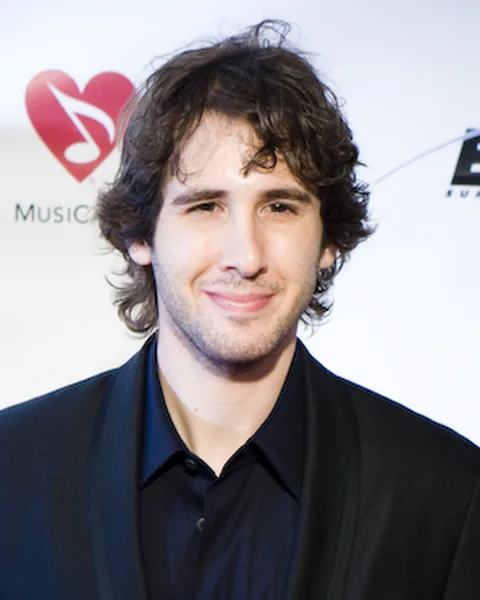
Josh Groban’s commonly cited range on the keyboard
Wondering how your voice compares? Take the free vocal range test. It takes about a minute, right in your browser.
The voice
Josh Groban’s voice is big and dark, with classical resonance shaped by pop phrasing, which is why his records are filed under classical crossover. He first drew wide attention in 1999, when he stood in for Andrea Bocelli at a Grammy Awards rehearsal. Groban calls himself a high lyric baritone, and a detailed range database cites roughly F#2 to G5, about three octaves, with the highest notes in light head voice. His full-voice singing mostly sits between about A2 and B4.
His voice type is a genuine debate. In 2002 he told the New York Times he was a “tenor in training”; in 2012 he called himself a baritone “with some high notes up my sleeve”; on David Letterman’s show in 2013 he settled on high lyric baritone. Range sources are split too: Wikipedia lists him among baritones, while one detailed range database files him as a tenor because his upper fourth octave is so free. The weight and color of his middle voice point to baritone; the ease of his A4s explains the tenor and baritenor labels.
Singing Groban means sustaining long legato lines around A4 to B4 without the sound turning shouty or pinched. Keep the vowels tall and rounded as you climb, think of an “oo” shape inside every vowel, and let more head voice into the mix above E4 instead of dragging chest weight up. Breath pacing matters as much as pitch: mark where you will breathe before you sing, because his phrases are long and slow.
Range moments worth studying
You Raise Me Up
Opens low around A#2 and builds through a key change to sustained A4s at the climax, with the very top near B4. The low start is as tricky as the finish.
To Where You Are
The ballad from his 2001 debut album sits mostly in the warm middle of his voice, a good piece for practicing legato and gentle dynamics.
Bring Him Home
His recording on the 2015 album Stages shows how much head voice he blends into the floated high phrases of this tenor showpiece.
Sing Josh Groban’s songs with feedback
Every song below has a full guide on this site: the range, the key, where the hard notes are, and how to practise them. Open one, then record it in the app to hear how close you are.
Can you sing it?
Baritones and tenors with a secure mix suit his keys, and mezzos and sopranos can sing him an octave up. Start with You Raise Me Up, in a lower key at first if the final A4s feel heavy. New to voice types? Read what it means to be a baritone, or take the free voice type test to see where you fit. A range label only tells you the edges. Whether a song feels good depends on where its melody sits. The Singing Coach AI app listens to you sing real songs, maps your range and tessitura, and tells you which keys and songs actually fit your voice, including whether Josh Groban’s catalogue is in reach today.
FAQ
What is Josh Groban’s voice type?
How many octaves can Josh Groban sing?
Is Josh Groban a tenor or a baritone?
Voices in the same neighbourhood
Singers whose cited range and voice type sit closest to Josh Groban’s. If one of them suits you, the other probably will too.
 Corey TaylorF#2–F#5 · baritone
 John LegendE2–G5 · baritone
 John LennonG2–F#5 · baritone
 Chris MartinF#2–E5 · baritone
 Layne StaleyE2–E5 · baritone
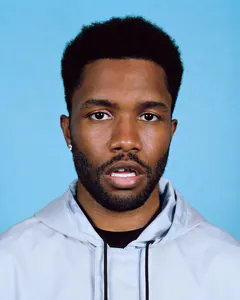 Frank OceanF2–C6 · baritone
Photo: Christopher Simon from Pasadena CA, USA, CC BY 2.0, via Wikimedia Commons. Range figures are estimates compiled from recordings and are not endorsed by the artist.