 Singing Coach AI
Brad Delp’s vocal range: F#2–C#6 (tenor)
The soaring, multi-tracked voice of Boston. Brad Delp’s range is commonly cited as roughly F#2 to C#6, about about 3.5 octaves. Estimates are compiled from studio recordings and live performances, so treat the exact edges as approximate.
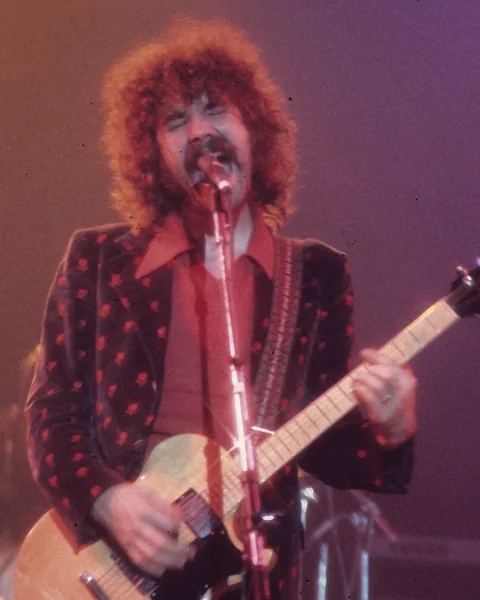
Brad Delp’s commonly cited range on the keyboard
Wondering how your voice compares? Take the free vocal range test. It takes about a minute, right in your browser.
The voice
Brad Delp was a high tenor whose range is commonly cited at roughly F#2–C#6, about three and a half octaves, though sources vary. As the voice of Boston, he is famous for sailing over Tom Scholz’s layered guitars with a clean, powerful top that rarely sounded strained, and for singing all of the stacked harmonies himself. There is little rasp or blues affectation; the tone is bright, sweet and precise, closer to a choirboy than a shouter, which is exactly why More Than a Feeling still sounds enormous.
Boston songs live high, with choruses in the C5 area and above sustained for bars at a time. Delp reportedly kept his falsetto and full voice so well blended that listeners could not tell where one ended, and that blend is the thing to practise: slide from chest into head voice on an ‘ee’ vowel, keeping the sound light and unforced at the top. Most amateur tenors should try these songs down a couple of keys first. Do not chase the volume; Boston’s wall of sound was built in the studio, so let the backing carry the weight.
Range moments worth studying
More Than a Feeling
The chorus climbs to sustained notes around C5 and above, held over the guitars, and it repeats enough to expose any tension in the top.
Peace of Mind
A slightly lower, groovier tune whose stacked harmonies are the challenge; the lead sits around the upper chest range.
Amanda
A gentler 1986 ballad that starts mid-range and rises for the chorus, a good way to learn his phrasing before the belt-heavy songs.
Don’t Look Back
Driving and high throughout, with a chorus that lives in the tenor belt zone.
Can you sing it?
There are no Boston songs in our library yet; tenors should try Amanda first, and take More Than a Feeling down two or three semitones until the C5 chorus is comfortable. A range label only tells you the edges. Whether a song feels good depends on where its melody sits. The Singing Coach AI app listens to you sing real songs, maps your range and tessitura, and tells you which keys and songs actually fit your voice, including whether Brad Delp’s catalogue is in reach today.
FAQ
What was Brad Delp’s voice type?
How many octaves could Brad Delp sing?
Did Brad Delp use falsetto or full voice for the high notes?
Voices in the same neighbourhood
Singers whose cited range and voice type sit closest to Brad Delp’s. If one of them suits you, the other probably will too.
 Elton JohnE2–C6 · tenor
 Jeff BuckleyF#2–E6 · tenor
 Michael JacksonD#2–C#6 · tenor
 Sam SmithF2–B5 · tenor
 Charlie PuthE2–B5 · tenor
 Conan GrayF#2–A5 · tenor
Photo: Carl Lender from Hollywood, FL, USA, CC BY-SA 2.0, via Wikimedia Commons. Range figures are estimates compiled from recordings and are not endorsed by the artist.