 Singing Coach AI
Freddie Mercury’s vocal range: F2–F6 (tenor)
Rock’s most theatrical showman across four octaves. Freddie Mercury’s range is commonly cited as roughly F2 to F6, about just under 4 octaves. Estimates are compiled from studio recordings and live performances, so treat the exact edges as approximate.
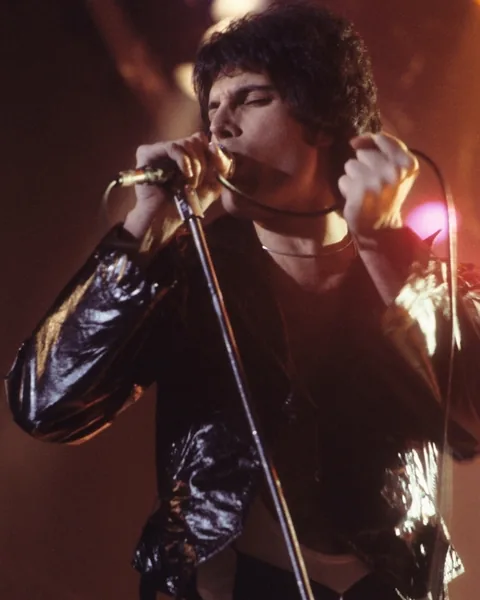
Freddie Mercury’s commonly cited range on the keyboard
Wondering how your voice compares? Take the free vocal range test. It takes about a minute, right in your browser.
The voice
Freddie Mercury is usually classified as a tenor, although his speaking voice and lowest notes suggest a natural baritone who trained himself upward. His full recorded range is commonly cited at roughly F2–F6, close to four octaves once falsetto is included. What made the voice unmistakable was not the span but the delivery: a fast, shimmering vibrato, a bright edge that cut through Brian May’s guitars, and a habit of switching from operatic grandeur to rock-and-roll grit inside a single phrase.
Singing Queen means living in the upper-middle of the voice for long stretches. The verses of Bohemian Rhapsody sit comfortably, but choruses like Somebody to Love push into A4 and B4 territory where most untrained singers either shout or flip into a weak falsetto. The skill to build is a supported mix: chest resonance carried up without extra pressure. A common mistake is copying his vibrato by wobbling the jaw; his came from steady airflow. Practise the chorus lines at a comfortable volume first, then add intensity.
Mercury also used a deliberate rasp and distorted belt on tracks like Tie Your Mother Down, and the stadium-era live recordings show him improvising well above the studio keys. Those effects are easy to imitate badly. Warm up thoroughly before attempting any gritty or shouted passages, keep the volume honest, and stop immediately if anything feels scratchy or sore. A tired voice is a signal, not a challenge.
Range moments worth studying
Bohemian Rhapsody
The operatic section climbs step by step, the famous ‘for me’ line lands around A#4, and the closing ‘nothing really matters’ verse is a gentle release down near the bottom of the staff.
Somebody to Love
A gospel-style workout with sustained belts around A4 and B4 in the final choruses, plus the exposed a cappella run before the last refrain.
Don’t Stop Me Now
Bright, driving chest voice that hovers around F4–A4 for most of the song, with the title line pushed a little higher each time.
Who Wants to Live Forever
Starts low and conversational, then opens out into a full-voice climax around G4–A4 that must be sung with warmth rather than force.
Can you sing it?
Tenors and high baritones with a solid mixed voice can take on much of the Queen catalogue; lower voices should transpose. Start with Crazy Little Thing Called Love or Love of My Life, which sit in a friendly middle register, before you attempt Somebody to Love. A range label only tells you the edges. Whether a song feels good depends on where its melody sits. The Singing Coach AI app listens to you sing real songs, maps your range and tessitura, and tells you which keys and songs actually fit your voice, including whether Freddie Mercury’s catalogue is in reach today.
FAQ
What was Freddie Mercury’s voice type?
How many octaves could Freddie Mercury sing?
Was Freddie Mercury a tenor or a baritone?
Voices in the same neighbourhood
Singers whose cited range and voice type sit closest to Freddie Mercury’s. If one of them suits you, the other probably will too.
 Jeff BuckleyF#2–E6 · tenor
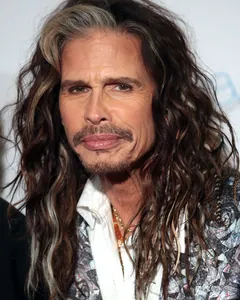 Steven TylerD2–E6 · tenor
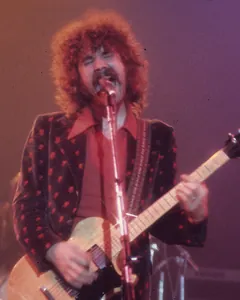 Brad DelpF#2–C#6 · tenor
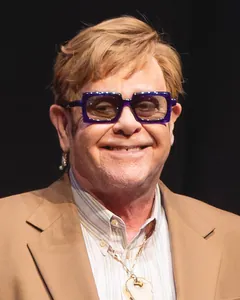 Elton JohnE2–C6 · tenor
 Michael JacksonD#2–C#6 · tenor
 PrinceF2–B6 · tenor
Photo: Carl Lender, CC BY-SA 3.0, via Wikimedia Commons. Range figures are estimates compiled from recordings and are not endorsed by the artist.