 Singing Coach AI
Hozier’s vocal range: C2–D5 (baritone)
Irish soul-folk baritone with a gospel roar. Hozier’s range is commonly cited as roughly C2 to D5, about just over 3 octaves. Estimates are compiled from studio recordings and live performances, so treat the exact edges as approximate.

Hozier’s commonly cited range on the keyboard
Wondering how your voice compares? Take the free vocal range test. It takes about a minute, right in your browser.
The voice
Hozier is a baritone, sometimes described as a baritenor, with a commonly cited range of roughly C2–D5. The voice is dark and grainy at the bottom, blues-inflected in the middle, and opens into a rough, gospel-style roar at the top of the chest voice, with a soft falsetto held in reserve. What makes him recognisable is the mix of registers within one song: the murmured, almost spoken verse of Take Me to Church and the howled chorus come from the same throat, and the growl on top is a colour, not a strain.
The good news for male singers is that Hozier’s songs sit where most men live. Verses hover around E2–E3 and the choruses top out at G4–A4, so the notes themselves are rarely the problem. The challenge is the weight of tone at the top: those chorus G4s are sung with a full, chesty belt and a bit of rasp, not a lightened mix. The common mistake is thinning out early or, worse, shouting. Practical tip: build Work Song first, keeping the low verse resonant and the chorus grounded, then move to Take Me to Church once the G4 feels easy and open.
Range moments worth studying
Take Me to Church
Listed at E2 to G4: a low, hushed verse near E2 and a chorus that rises to a growled, sustained G4 on “take me to church.”
Movement
Reaches down to C2, the bottom of his commonly cited range, in the verse, then climbs to a soaring G4 chorus.
Work Song
Spans just B2 to F#4 with a stomping gospel feel; a friendly way to learn his chest-voice sound.
Too Sweet
Sits around G2 to A4, with a slinky, low verse and a chorus that pushes right up to the top of his usual belt.
Sing Hozier’s songs with feedback
Every song below has a full guide on this site: the range, the key, where the hard notes are, and how to practise them. Open one, then record it in the app to hear how close you are.
Can you sing it?
Baritones and most tenors can sing nearly all of Hozier’s catalogue; start with Work Song (B2–F#4) or Like Real People Do (G2–E4), then graduate to the G4 choruses of Take Me to Church and From Eden. A range label only tells you the edges. Whether a song feels good depends on where its melody sits. The Singing Coach AI app listens to you sing real songs, maps your range and tessitura, and tells you which keys and songs actually fit your voice, including whether Hozier’s catalogue is in reach today.
FAQ
What is Hozier’s voice type?
How many octaves can Hozier sing?
Is Hozier a tenor or a baritone?
Voices in the same neighbourhood
Singers whose cited range and voice type sit closest to Hozier’s. If one of them suits you, the other probably will too.
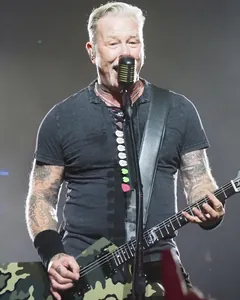 James HetfieldD2–E5 · baritone
 Julian CasablancasE2–C#5 · baritone
 Layne StaleyE2–E5 · baritone
 Alex TurnerE2–B4 · baritone
 Eddie VedderE2–B4 · baritone
 Kurt CobainF2–C5 · baritenor
Photo: Kayla Johnson from Seattle, United States, CC BY 2.0, via Wikimedia Commons. Range figures are estimates compiled from recordings and are not endorsed by the artist.