 Singing Coach AI
Barbra Streisand’s vocal range: B2–D6 (mezzo-soprano)
Broadway-bred mezzo with chart-topping albums in six decades. Barbra Streisand’s range is commonly cited as roughly B2 to D6, about 3 octaves. Estimates are compiled from studio recordings and live performances, so treat the exact edges as approximate.
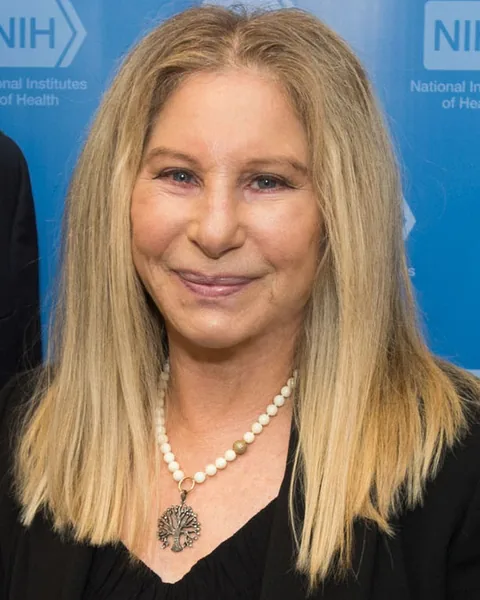
Barbra Streisand’s commonly cited range on the keyboard
Wondering how your voice compares? Take the free vocal range test. It takes about a minute, right in your browser.
The voice
Barbra Streisand is a mezzo-soprano whose recorded range is commonly cited at roughly B2 to D6, about three octaves, a span critics were already praising when she was 20. Almost everything she is loved for sits in a narrower band, from about G3 up to E5. The sound is instantly recognizable: a bright, forward placement with a hint of nasal edge, crisp Brooklyn consonants, and a crescendo that seems to keep growing after the phrase should have peaked. She sings like an actor, shaping every line around the meaning of the words.
Singing Streisand is mostly a breath and stamina problem rather than a range problem. Her ballads (The Way We Were, People, Evergreen) live between G3 and E5, but they ask for long, unbroken phrases that grow from a near-whisper to a full mixed belt without a gasp in between. The common mistake is hauling chest voice up to the E5 climaxes; she lets the tone brighten and thin as it rises. Practical tip: mark your breaths in pencil before you sing, then rehearse the last page of each song first, while you are fresh, so the big finish is practiced rather than survived.
Range moments worth studying
Don't Rain on My Parade
The Funny Girl showstopper, listed at A#3 to G5, is her brassiest belt: rapid, crisply spoken lines that culminate in a sustained G5, a test of mix rather than raw chest.
The Way We Were
Listed at G3 to E5. The opening is almost spoken around middle C, then the melody opens upward in long legato lines; the skill is keeping the tone warm as it climbs.
People
Listed at G3 to E5, a slow, exposed ballad where the swell into the final phrase needs steady breath far more than extra notes.
Send in the Clowns
Her version on The Broadway Album (1985), listed at D#3 to C#5, sits lower than most of her catalogue and shows off a dark, controlled bottom register.
Sing Barbra Streisand’s songs with feedback
Every song below has a full guide on this site: the range, the key, where the hard notes are, and how to practise them. Open one, then record it in the app to hear how close you are.
Can you sing it?
Mezzo-sopranos and strong altos are the natural fit: start with The Way We Were or Evergreen, which stay at or below E5, and save Don't Rain on My Parade for when your belt is secure. New to voice types? Read what it means to be a mezzo-soprano, or take the free voice type test to see where you fit. A range label only tells you the edges. Whether a song feels good depends on where its melody sits. The Singing Coach AI app listens to you sing real songs, maps your range and tessitura, and tells you which keys and songs actually fit your voice, including whether Barbra Streisand’s catalogue is in reach today.
FAQ
What is Barbra Streisand's voice type?
How many octaves can Barbra Streisand sing?
Is Barbra Streisand a soprano or a mezzo-soprano?
Voices in the same neighbourhood
Singers whose cited range and voice type sit closest to Barbra Streisand’s. If one of them suits you, the other probably will too.
 RihannaB2–D6 · mezzo-soprano
 Britney SpearsB2–C#6 · mezzo-soprano
 Céline DionB2–E6 · mezzo-soprano
 Demi LovatoC3–D#6 · mezzo-soprano
 RAYEC#3–D6 · mezzo-soprano
 AdeleC3–C6 · mezzo-soprano
Photo: NIH Image Gallery from Bethesda, Maryland, USA, Public domain, via Wikimedia Commons. Range figures are estimates compiled from recordings and are not endorsed by the artist.