 Singing Coach AI
Stevie Wonder’s vocal range: D#2–B5 (tenor)
Motown’s genius tenor of joy and invention. Stevie Wonder’s range is commonly cited as roughly D#2 to B5, about about 3.5 octaves. Estimates are compiled from studio recordings and live performances, so treat the exact edges as approximate.
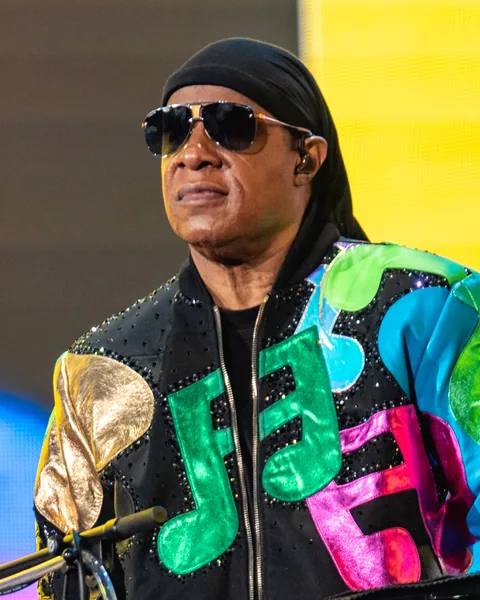
Stevie Wonder’s commonly cited range on the keyboard
Wondering how your voice compares? Take the free vocal range test. It takes about a minute, right in your browser.
The voice
Stevie Wonder is a tenor whose range is commonly cited at roughly D#2–B5, around three and a half octaves, with a bright, elastic chest voice at the centre of it. The instrument is instantly recognisable for its sheer joy: a sunny, forward tone, quick vibrato, and improvised runs that tumble across the beat. He sings like the multi-instrumentalist he is, treating the voice as another rhythm instrument, landing syllables precisely on the funk groove of Superstition or the swung phrasing of Sir Duke.
Wonder’s songs are deceptively hard because so much of the melody is improvisation stacked on a simple tune. Learn the written melody first (the verses of Isn’t She Lovely or You Are the Sunshine of My Life are a manageable E3–A4), then add ornaments one at a time. The tessitura pushes tenors into the G4–C5 zone on the choruses, so keep the sound light and mixed rather than heavy. A common mistake is over-riffing; he riffs as a conversation with the band, not to show off, and every run resolves cleanly to the melody.
Range moments worth studying
Superstition
Growled low phrases around the bottom of the staff, then a chorus that punches up toward C5; a groove test as much as a range test.
Isn’t She Lovely
One of his most singable: mid-range E3–A4 with a relaxed swing, ideal for learning his phrasing.
Living for the City
Spans nearly three octaves in the library’s chart, from a low F#2 to falsetto screams around G#5 in the final section.
I Just Called to Say I Love You
A low, gentle ballad that never climbs above F#4, so the challenge is warmth and tuning, not power.
Sing Stevie Wonder’s songs with feedback
Every song below has a full guide on this site: the range, the key, where the hard notes are, and how to practise them. Open one, then record it in the app to hear how close you are.
Can you sing it?
Tenors and high baritones can start with Isn’t She Lovely (E3–A4) or I Just Called to Say I Love You (G#2–F#4); leave Living for the City and Higher Ground until the top mix is secure. A range label only tells you the edges. Whether a song feels good depends on where its melody sits. The Singing Coach AI app listens to you sing real songs, maps your range and tessitura, and tells you which keys and songs actually fit your voice, including whether Stevie Wonder’s catalogue is in reach today.
FAQ
What is Stevie Wonder’s voice type?
How many octaves can Stevie Wonder sing?
Does Stevie Wonder use falsetto?
Voices in the same neighbourhood
Singers whose cited range and voice type sit closest to Stevie Wonder’s. If one of them suits you, the other probably will too.
 Charlie PuthE2–B5 · tenor
 George MichaelD2–B5 · tenor
 Elton JohnE2–C6 · tenor
 Michael JacksonD#2–C#6 · tenor
 Sam SmithF2–B5 · tenor
 Robert PlantD2–A5 · tenor
Photo: Raph_PH, CC BY 2.0, via Wikimedia Commons. Range figures are estimates compiled from recordings and are not endorsed by the artist.